
You open your wardrobe one weekday morning, nothing matches, and the instinct is to scroll through a marketplace for twenty minutes without buying anything. The problem isn’t the lack of clothes; it’s the absence of a common thread between the pieces. Finding good shopping ideas and fashion inspirations requires a method more than a budget.
Building a coherent wardrobe before looking for fashion trends
The first instinct is often to buy a piece spotted on a runway or social media, only to realize it doesn’t go with anything in the closet. The reverse approach works better. Before any shopping session, take stock of what you actually wear over a typical week.
Three categories quickly emerge: the basics worn repeatedly, the pieces forgotten at the back of a shelf, and the gaps that force improvisation every morning. Identifying concrete gaps guides every future purchase. A pair of perfectly cut pants but no matching top, a blazer waiting for a decent pair of shoes – this is where shopping becomes useful.
A structured selection by type of piece and season can be found on the shopping page of Les Carnets de Mademoiselle, which helps to target rather than navigate randomly.
Noting on your phone the three pieces you lack before entering a store or opening a website transforms the approach. You move from an impulsive purchase to one that completes an existing outfit.

Autumn-winter shopping ideas: focus on colors and materials
The cold season naturally leans towards black, gray, and navy. We won’t pretend these colors should be avoided; they form a solid base. The real question is what you put on top.
Colors that change an outfit without risk
Just one piece in a bolder color is enough to break the monotony of a dark outfit. Bordeaux, pine green, or camel work with most neutral basics. One strong color per outfit, no more, avoids the costume effect.
Opinions vary on the choice of the colored piece, but in practice, a visible accessory (bag, scarf, shoes) offers more versatility than an entire coat in a bright color that you end up finding tedious by February.
Materials to touch before buying
Online, we judge a garment by a photo. In-store, we judge it by touch. For the autumn-winter season, the density of the fabric matters as much as the cut. A thin sweater worn under a thick coat doesn’t give the same result as a structured knit that stands alone.
- Ribbed knit retains its shape after several washes, unlike overly loose knits that deform at the elbows within weeks.
- Mixed wool fabric remains a good compromise for coats: warm enough without the weight of pure cashmere, and significantly more affordable.
- Corduroy regularly returns in autumn collections and works well as both pants and a light jacket for mid-season.
When ordering online, checking the composition on the product sheet takes ten seconds and avoids disappointment upon receipt.
Sustainable fashion inspirations: shopping changes circuits
Since July 19, 2026, large companies in the European Union are no longer allowed to destroy unsold clothing, accessories, and shoes. This ban, stemming from the European Regulation 2024/1781 on ecodesign (ESPR), forces the sector to rethink its circuits.
For us, buyers, the consequence is direct: clearance offers, refurbished items, and second-hand options are becoming structured. You can find quality pieces at reduced prices where there was nothing three years ago. Micro and small businesses are exempt from this ban, and medium ones will be until 2030, but large groups are already adapting their stocks.
Second-hand circuits are becoming a real shopping channel, not a backup plan. Online thrift stores, organized closet sales, refurbished corners in stores: the quality of available pieces has risen because brands can no longer simply throw away what hasn’t sold.
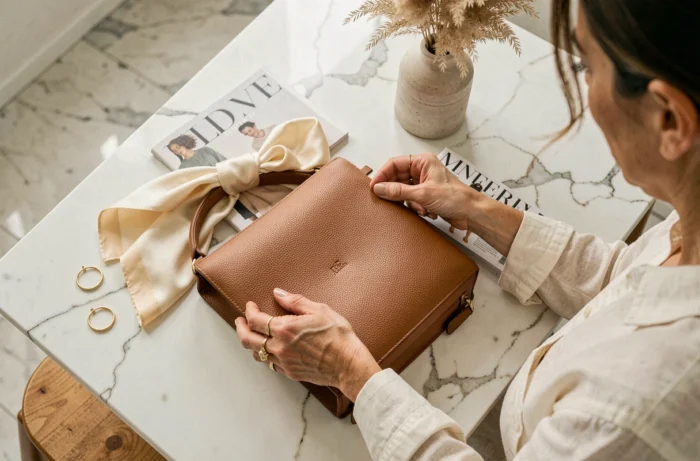
Adopting a personal style without following every women’s trend
Trends serve as guidelines, not directives. Wearing oversized linen because the runways showed it doesn’t work if you spend your days in meetings in an air-conditioned office. You save time by filtering trends against your real life.
A simple test: if you can’t wear the piece at least twice a week in your current daily life, it doesn’t belong in the cart. This filter eliminates most regrettable purchases.
Three criteria for sorting fashion inspiration
- Does the piece pair with at least three outfits already in the wardrobe? If the answer is no, move on.
- Is the cost per wear (price divided by the number of times you will actually wear it) reasonable? An expensive coat worn all winter costs less per use than a discounted top worn once.
- Does the cut fit without alterations? A garment that requires modifications before the first wear is rarely a good purchase.
Enhancing your style doesn’t come from accumulating trendy pieces. It’s a process of subtraction: removing what doesn’t work, filling in what’s missing, and resisting what shines on a screen but corresponds to nothing in real life.
A purchase that you can slip on without hesitation on a Tuesday morning and that retains its shape three seasons later is a sign that you’ve hit the mark.