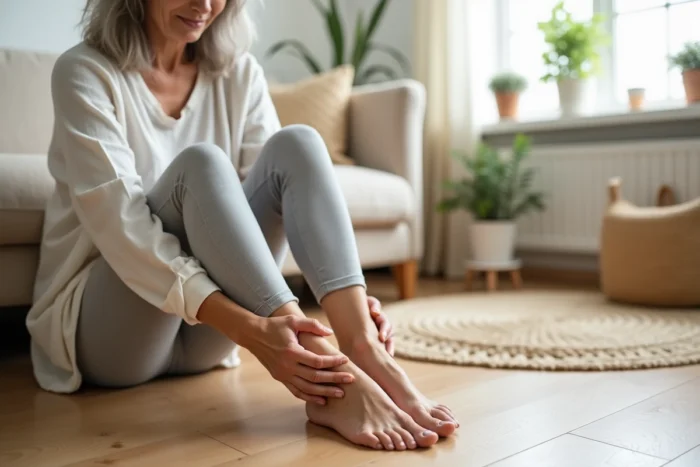
Blood circulation in the feet depends on a precise mechanism: the muscle pump of the calf and the arch of the foot. With each step, the compression of the vessels under the foot propels blood towards the calf and then to the heart. When this mechanism slows down (prolonged sitting, nighttime immobility, loss of mobility), blood stagnates in the lower limbs. Symptoms then appear: cold feet, numbness, a feeling of heavy legs, swelling at the end of the day.
Warning signs before trying to stimulate foot circulation
Before any attempt to restart circulation, a screening is necessary. Phlebologists remind us that certain signs should lead to a medical consultation, not to exercises or massages.
- A sharp and sudden pain in a foot or calf, especially if accompanied by asymmetric swelling (only one side affected), may indicate thrombophlebitis.
- An unusual redness associated with a local feeling of warmth points to an inflammatory or thrombotic process that formally contraindicates deep massage and very hot baths.
- Shortness of breath occurring alongside pain in the lower limbs requires urgent medical advice.
People at risk of thrombosis or advanced venous insufficiency should have their circulation evaluated before introducing practices such as hot baths or deep massages. These techniques, often presented as harmless, can worsen an existing venous condition.
To better understand how to safely stimulate circulation in the foot, distinguishing between benign discomfort and pathological signals remains the first reflex to adopt.
Micro-movements upon waking: the circulatory safety window
The first few minutes after waking represent a key moment to restart venous return without the risk of injury. After several hours of immobility, blood tends to stagnate in the feet and ankles. Getting up suddenly to walk can cause dizziness in fragile individuals, or even falls in seniors.
The sequence recommended by specialists combines three simple actions, achievable in bed or sitting at the edge of the mattress.
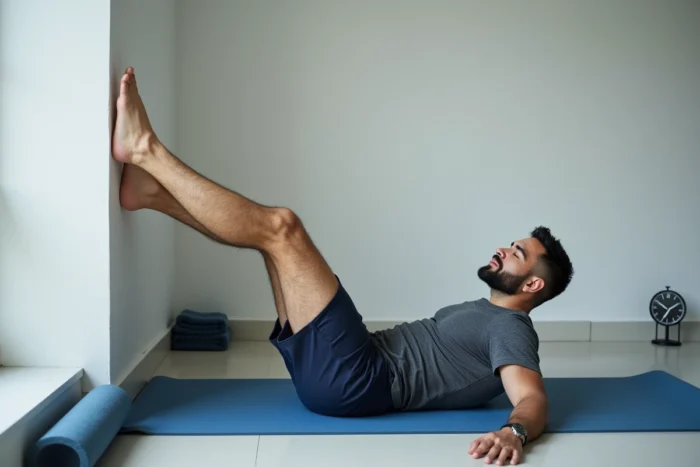
Wiggling the toes for a few minutes activates the small muscles of the foot and initiates plantar venous compression. The flexion-extension of the ankles (pedal movement) then engages the calf, the true engine of venous return in the legs. Elevating the feet above heart level, even briefly, facilitates drainage by gravity.
This routine requires no equipment or particular physical condition. It reduces blood stagnation while limiting the risk of trauma from overly ambitious exercises first thing in the morning.
Plantar pump and walking: the mechanism to prioritize daily
Walking remains the most effective gesture to maintain foot circulation. With each step, the plantar venous sole (network of veins under the arch) is compressed and sends blood upwards. The relay is taken over by the calf muscles that compress the deep veins.
Walking regularly is better than walking for long periods. For sedentary individuals or those in prolonged sitting positions, a few minutes of walking every hour is enough to reactivate this circuit. The amplitude of the ankle movement is as important as the duration: a step that rolls the foot well from heel to toes maximizes the pump effect.
Adjusting intensity to avoid injuries
Seniors and individuals with joint problems should prioritize flat surfaces and stable shoes. The combination of “micro-movements at home and environmental safety” (absence of obstacles on the floor, good lighting) simultaneously reduces venous stagnation and the risk of falls.
For more active individuals, swimming and cycling engage the calf muscle pump with minimal joint impact. These activities are particularly suitable in cases of foot or joint pain that would make prolonged walking uncomfortable.
Heat, compression, and postures: what helps and what worsens
Several common habits directly influence venous pressure in the feet, for better or worse.
Leg elevation
Elevating the feet fifteen to twenty centimeters above heart level while lying down promotes venous return through simple gravity. This posture relieves symptoms of heavy legs and reduces swelling, with no mechanical risk. It can be practiced several times a day, especially after a long period of standing.
Heat: a frequent false friend
Very hot baths, saunas, and prolonged sun exposure dilate the superficial veins. In a person whose venous system functions normally, the effect is temporary. In someone with venous insufficiency or varicose veins, this dilation worsens blood stasis and can intensify pain. Cool showers on the legs, from the ankles to the thighs, produce the opposite effect: they tone the venous walls.
Compression stockings
Compression stockings or socks exert a decreasing pressure, stronger at the ankle and decreasing towards the knee. They compensate for the failure of venous return by keeping blood moving upwards.
Their use is particularly relevant during prolonged sitting trips, in hot weather, or by medical prescription in cases of diagnosed venous pathology. However, a poor choice of size or compression class can cause a tourniquet effect, hence the need for proper fitting.
Tight clothing and risky postures
Crossing the legs compresses the veins at the knee and slows blood return. Clothing that is too tight around the waist, groin, or calves produces the same tourniquet effect. These habits, when isolated, seem harmless. Repeated daily, they contribute to the worsening of venous problems.
Blood circulation in the feet relies on simple but sensitive mechanisms. The most protective gesture remains the most accessible: regularly move the feet and ankles, adjust effort to one’s physical condition, and consult at the slightest asymmetrical or painful sign rather than multiplying stimulations.