
A factory that hires ten additional workers to produce more and another that installs optimization software to double its output without hiring: these two companies are experiencing growth, but of different types. Understanding extensive growth and intensive growth means grasping two production logics that coexist in any economy, but whose relative weight changes according to a country’s stage of development.
Overall Factor Productivity: The Criterion That Separates the Two Models
Most definitions contrast extensive growth (more labor, more capital) with intensive growth (better efficiency). This distinction is based on a specific indicator: overall factor productivity (OFP). When OFP increases, each unit of labor or capital produces more. Growth is then intensive.
Robert Solow estimated that the vast majority of growth in the United States between 1909 and 1949 came not from labor or capital, but from a “residual” attributed to technological progress. Edward F. Denison qualified this observation but confirmed the significant contribution of this residual factor. It is on this empirical basis that the extensive/intensive distinction has become established in macroeconomics.
In practical terms, to determine whether a country’s growth is more extensive or intensive, we look at the share of OFP in the increase of GDP. If this share is low, growth relies mainly on resource accumulation. If it is high, technological progress and organization play the driving role.
To delve deeper into the nuances between extensive and intensive growth, we must also consider what concretely fuels each model within a company or sector.
Four Concrete Levers of Intensive Growth
The term “technological progress” remains vague. Behind it lie very different mechanisms that affect productivity. Four of them consistently emerge from the economic literature.
- Capital accumulation per capita: when the stock of machines and equipment per worker increases, each employee produces more. This is measured by the capital coefficient (the ratio of the value of installed capital stock to the output produced).
- The organization of work, particularly the division of tasks, which reduces downtime and promotes specialization. Adam Smith had already identified this with his pin factory.
- Technological progress in the strict sense: new machines, new processes, digitization of production lines. This is the most visible lever.
- The increase in the level of education and training, what economists call human capital. Robert Lucas made it a central factor of endogenous growth.
These four levers do not operate in isolation. A company that invests in high-performance machines without training its employees to use them only derives partial benefits from its investment.
The Spanish Example Post-Covid: When Growth Remains Extensive Despite Good Numbers
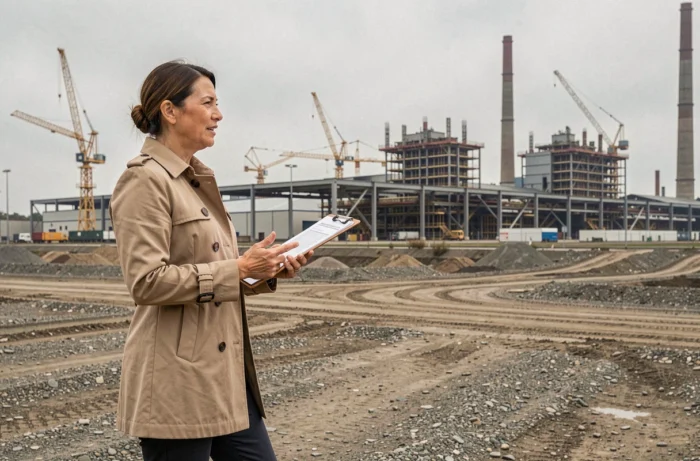
A country can show solid GDP growth while remaining in an extensive model. Spain after the pandemic offers a striking illustration. According to the French Ministry of Economy, recent Spanish growth relies mainly on job creation rather than on productivity gains per capita.
In other words, Spain has produced more by mobilizing more workers, not by making each worker more efficient. GDP has increased, but individual productivity has stagnated. This is the very definition of extensive growth.
Why is this a long-term problem? Because a country cannot indefinitely increase its labor force. There are demographic, migratory, and budgetary limits. Extensive growth eventually hits a physical ceiling of available resources. Intensive growth, on the other hand, pushes this ceiling back by extracting more value from each resource already in place.
Artificial Intelligence and Productivity: The Extensive-Intensive Boundary Becomes Blurred
You may have noticed that AI is everywhere in current economic debates? This is not a coincidence. Artificial intelligence poses a conceptual challenge to the classic distinction between the two types of growth.
On one hand, AI is a factor of intensive growth: it automates tasks, speeds up processes, reduces errors. Productivity gains related to AI can be substantial without adding labor. On the other hand, AI creates new tasks and new jobs, which effectively expands the scope of work, a rather extensive mechanism.
BNP Paribas highlights in a synthesis of the economic literature that AI can support productivity while having heterogeneous effects on employment depending on sectors and qualifications. In a call center, AI replaces positions. In an engineering firm, it frees up time for higher value-added tasks. The aggregated result depends on the economic structure of the country.
This ambiguity shows that the extensive-intensive distinction is an analytical tool, not a watertight category. In reality, most modern economies combine both logics in varying proportions.
The Role of the State and Public Policies in the Shift Towards Intensive Growth
The transition from an extensive model to an intensive model does not happen spontaneously. It depends on concrete political choices.
Theories of endogenous growth, notably advocated by Robert Lucas and Paul Romer, show that public investment in education, research, and infrastructure generates increasing returns. Unlike Solow’s model where technological progress “falls from the sky,” endogenous growth assumes that the state can actively steer a country’s productive trajectory.
A country that allocates a significant share of its GDP to research and development creates the conditions for sustainable intensive growth. A country that relies solely on the extraction of natural resources or on cheap labor remains in an extensive framework, with the fragilities that this implies: dependence on global prices, vulnerability to demographic shocks, low upgrading.
Russia illustrates this trap well. Its economy, long driven by hydrocarbon exports, has experienced largely extensive growth. Technological development and productive diversification remain structural challenges.
The real question for contemporary economies is therefore not to choose between extensive and intensive growth, but to understand to what extent each contributes to GDP, and how to tilt the balance towards sustainable productivity gains rather than mere accumulation of factors.