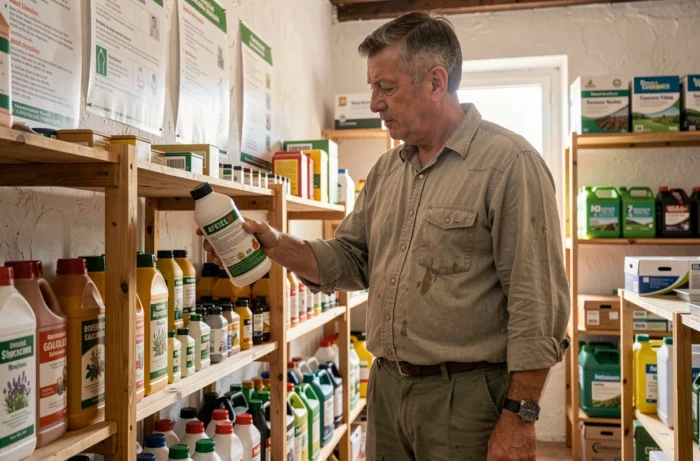
Glyphosate 360 remains authorized in Portugal for professional use, but the conditions for purchasing and transporting it to France are subject to specific rules. Between the Portuguese regulatory framework, the strict distinction between professional and private buyers, and the formulations available locally, this guide measures the concrete gaps that separate a legal approach from an infringement.
Portuguese Regulation of Glyphosate 360: What the Law Distinguishes
Portugal applies the European reauthorization of glyphosate decided in November 2023 for an additional ten years. The active substance remains legal on Portuguese territory, but Decree-Law No. 101/2009, amended since, introduces a clear separation between two categories of buyers.
The sale of glyphosate to individuals is prohibited in Portugal. Only professionals holding a phytosanitary certification (certificado de aptidão) can acquire products containing glyphosate 360. This certification attests to training in the handling of phytopharmaceutical products and conditions access to agricultural sales points.
Several municipalities had banned glyphosate from public spaces, with Porto leading the way as early as 2015. By the end of 2024, some of these bans were partially lifted, with a reintroduction on an exceptional basis under strict conditions. This turnaround illustrates the tension between local restrictions and the European framework, and it has expanded the availability of the product for municipal service providers. For those wishing to purchase glyphosate 360 in Portugal in a professional context, certification remains the non-negotiable prerequisite.
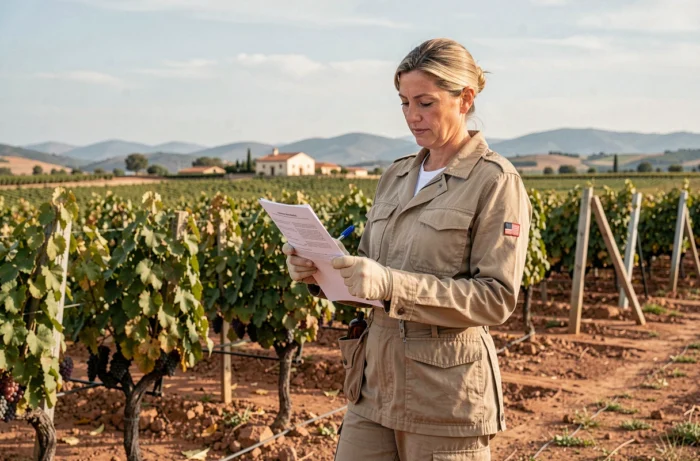
Comparison of Purchasing Conditions: Portugal, Spain, and France
The three countries apply the same European authorization, but the modalities for accessing the product differ significantly. The table below summarizes the discrepancies regarding the points that condition a cross-border purchase.
| Criterion | Portugal | Spain | France |
|---|---|---|---|
| Sale to individuals | Prohibited | Prohibited since 2022 | Prohibited since 2019 |
| Certification required | Certificado de aptidão | Carné de aplicador | Certiphyto |
| Available glyphosate 360 formulations | Several brands (Roundup, generics) | Roundup and generics | Restricted formulations, agricultural use only |
| Authorized usage areas | Agricultural + public spaces under exemption | Agricultural + uncultivated areas | Agricultural, with increasing restrictions on non-agricultural areas |
| Mutual recognition of foreign certificate | Not automatic | Not automatic | Not automatic |
Spain has a regulatory profile similar to Portugal, but generic formulations are sometimes fewer there. None of these three countries automatically recognizes the phytosanitary certificate issued by another member state. A French professional holding a Certiphyto must check with the Portuguese distributor whether this document is sufficient or if an equivalence is required.
Formulations and Concentrations on the Portuguese Market
Glyphosate 360 refers to a concentration of 360 g of active substance per liter. This is the most common formulation in Portugal, offered in packaging ranging from one to several dozen liters. The products carry a marketing authorization (AMM) issued by the DGAV (Direção-Geral de Alimentação e Veterinária), the competent Portuguese authority.
Available brands include Roundup 360 and several generics, with prices varying significantly. Checking the Portuguese AMM number on the label ensures that the product is legally marketed in Portugal, which is distinct from its authorization for use in France.
Cross-Border Transport of Phytosanitary Products: Legal Constraints
Buying an authorized product in Portugal does not mean it can be used freely in France. European Regulation (EC) No. 1107/2009 governs the marketing of phytopharmaceutical products by member state. Each product must have an AMM in the country where it is used.
- A glyphosate 360 with a Portuguese AMM cannot be applied in France without a corresponding French AMM, even if the active substance is identical.
- Transport for professional personal use in France is subject to penalties if the product is not registered with ANSES.
- The mutual recognition procedure (Article 40 of Regulation 1107/2009) theoretically allows obtaining a French AMM for a product already authorized in another member state, but it is the responsibility of the manufacturer or importer, not the end user.
Bringing back Portuguese glyphosate 360 for use in France without a French AMM constitutes an infringement. Inspections at internal borders for this type of product are rare, but inspections on farms by regional plant protection services systematically check the compliance of labels and AMMs.
Concrete Risks in Case of Non-Compliance
The penalties provided by the French rural code for the use of unauthorized phytopharmaceutical products range from administrative fines to criminal prosecution. For an agricultural professional, an infringement detected during a control also conditions access to CAP aids.

Glyphosate in Portugal: Regulatory Evolution and Recent Signals
The European Chemicals Agency (ECHA) has reexamined the classification of glyphosate regarding carcinogenicity. The reaffirmed European position is that glyphosate is not classified as carcinogenic according to the CLP regulation criteria, a point that stabilizes its authorization in the short term.
In Portugal, the DGAV follows this position and has not further restricted access to glyphosate 360 for professionals. However, European associations have initiated legal actions against the European Commission regarding reauthorization, which could alter the regulatory landscape in the coming years.
The European Parliament has published several briefings in 2026 on the regulation of glyphosate, indicating that the debate remains active at the institutional level. For professionals who depend on this herbicide for weeding agricultural areas or uncultivated zones, keeping track of these developments directly conditions the sustainability of their supply.
A legal purchase in Portugal thus requires three simultaneous verifications: the professional certification of the buyer, the AMM number of the product, and compatibility with the regulations of the final usage country. Without these three elements combined, the legality of the operation does not hold.