The French DIY market is undergoing a period of restructuring. Sales in specialized large stores are declining, households are postponing major projects, and consumption habits are shifting towards repair and regular maintenance. Which segments are holding up, which are dropping, and where are DIYers in France shifting their spending?
Maintenance DIY vs. Major Works: Consumption Gaps
The 2024 barometer from the Federation of DIY Stores (FMB) and the Federation of New Habitat Industries (Inoha) highlights a marked decline in sales in large DIY stores. The phenomenon does not affect all departments in the same way.
Heavy renovation projects (insulation, carpentry, room layout) are the first to be postponed. In contrast, products related to minor maintenance, common hardware, and repairs are maintaining their levels. Households are looking to extend the lifespan of their equipment rather than replace it.
| Segment | Consumption Trend | Main Factor |
|---|---|---|
| Heavy Renovation (insulation, carpentry) | Postponement or abandonment | Constrained purchasing power |
| Minor Maintenance DIY | Stable to slight increase | Extension of equipment lifespan |
| Power Tools | Selective, quality/price trade-off | Search for versatility |
| Light Decoration and Layout | Maintained through online DIY | Influence of video tutorials |
Nearly half of the French people report reducing their home equipment spending. This figure reflects a clear trade-off: repair before renovating, maintain before transforming. For everything about Monsieur Bricoleur, enthusiasts find regular updates on these trends and tailored advice for each type of project.

Online DIY Trends: The Growing Weight of Video Tutorials
DIY on social media is reshaping practices. TikTok and YouTube are concentrating an increasing share of inspiration and technical advice searches, at the expense of traditional blogs and product sheets from brands.
Long tutorials remain consulted for technical projects. A DIYer who is unsure about choosing a jigsaw or laying a floor covering will compare several videos before heading to the store or ordering online.
This phenomenon has a direct effect on brands. Several distributors are investing in their own content channels, with product demonstrations filmed in real conditions. The challenge is no longer just to sell a tool, but to show its practical use.
How DIY Creators are Changing the Buying Journey
- A recommendation from a video creator weighs more than the manufacturer’s technical sheet for choosing an entry-level or mid-range product
- Promotions and discount codes shared via social media trigger impulsive purchases of consumables (blades, abrasives, glues)
- “Before/After” projects published online attract new profiles to DIY, particularly people who would not have taken the plunge without these visual demonstrations
DIY Brands: Adapting Formats and Services
In response to the market decline, brands are not all reacting in the same way. Some are focusing on service (tool rentals, in-store workshops, project support), while others are emphasizing digital and fast delivery.
Local networks are facing increased pressure, while online platforms are gaining ground due to the depth of their catalogs.
Criteria Influencing the Choice of an Online Brand
The comparison of online DIY brands highlights several discriminating criteria:
- The availability of verified reviews and choice assistance content (guides, integrated comparators)
- Delivery times, which vary significantly from one platform to another for bulky products (panels, bags of cement, machines)
- After-sales service and return management, a sensitive point for power tools
- Pricing policy on consumables, often more aggressive online than in physical stores
Sustainable Craftsmanship and Handmade Creation: An Expanding Segment
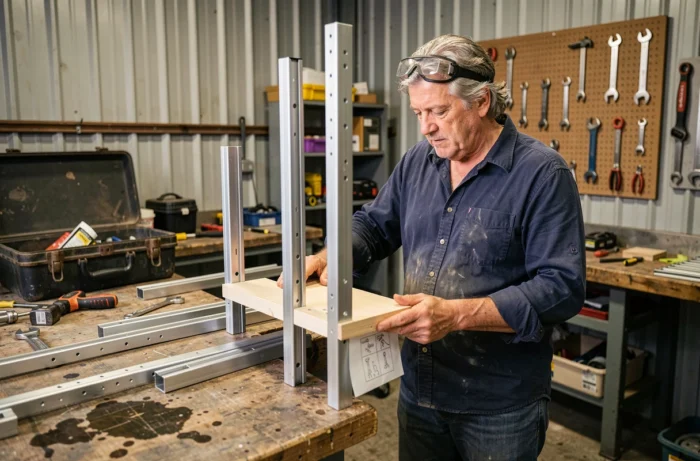
The 2026 trends in artisanal creation show a growing interest in sustainable materials and reinterpreted traditional techniques. Handmade craftsmanship is structured around short circuits and practical training, supported by workshops led by professional artisans.
This movement goes beyond simple creative leisure. It aligns with concerns about repair and reuse: learning to restore a piece of furniture, reupholster a chair, or make one’s own shelves fits into a logic of autonomy that is gaining traction.
The profile of participants is diversifying: complete beginners are alongside experienced DIYers looking to acquire specific skills (welding, cabinetry, leather sewing).
The French DIY market is not contracting uniformly. Major works are declining, but minor maintenance, repair, and sustainable craftsmanship are progressing. The brands that adapt best are those that combine educational content, in-store services, and targeted online presence. The key takeaway: the French DIYer spends differently, not necessarily less.