
When starting a cortisone treatment, the first dietary reflex we are asked about concerns salt. Reducing sodium is fundamental. However, limiting corticosteroids to just a question of salt and sugar overlooks less visible mechanisms that weigh equally on health: muscle wasting, bone loss, potassium imbalances. Nutrition during corticosteroid therapy deserves a broader approach than the list of prohibitions found everywhere.
Proteins and Muscle Mass Under Corticosteroids: The Blind Spot
Most dietary guides for cortisone mention weight gain, water retention, and facial swelling. There is less talk about muscle wasting, which actually begins within the first few weeks of prolonged treatment.
Corticosteroids accelerate the breakdown of muscle proteins. If we do not compensate with sufficient protein intake, we lose lean mass while storing fat, especially in the abdominal area. Preserving muscle mass is as much a priority as limiting salt.
In practice, we aim for protein sources at every main meal: eggs, poultry, fish, legumes. Dairy products provide both protein and calcium, ticking two boxes. For those who find the advice from the Conseils Cuisine site, the idea of structuring each meal around a protein source comes up often, and it’s a reflex to establish from the start of treatment.
Combining this dietary intake with resistance physical activity (hiking, bodyweight exercises, resistance bands) enhances the effect. We are not talking about intensive bodybuilding, but about maintaining regular muscle engagement.
Reducing Sodium Without Falling into a Strict Diet
Salt is the first dietary lever mentioned in any corticosteroid therapy, and rightly so. Corticosteroids promote sodium retention, which increases blood pressure and causes edema. Reducing salt intake mitigates these effects.
The trap is believing that it is enough to stop salting dishes. The majority of sodium comes from processed foods, not from the salt shaker on the table.
- Cold cuts, hard cheeses, industrial prepared meals, and bouillon cubes concentrate sodium levels far exceeding what we add ourselves while cooking.
- Regular bread is a major daily contributor: opting for salt-free or reduced-sodium bread makes a real difference over the week.
- Snack foods, chips, and smoked fish should be avoided as much as possible throughout the treatment.
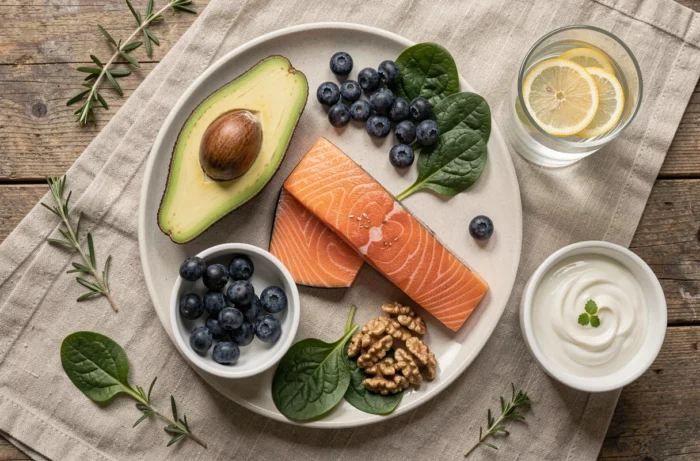
To compensate for the loss of flavor, we turn to spices, fresh herbs, lemon, and garlic. We can also use potassium salts (sold as “fake salts”), but only after consulting a doctor: under corticosteroids, urinary potassium is already disrupted, and excessive supplementation can pose problems.
Calcium and Vitamin D: Adapt Rather Than Automate
Corticosteroids increase urinary calcium losses, which exposes patients to a risk of osteoporosis during long treatments. Consuming calcium-rich foods is a logical measure: dairy products, calcium-rich mineral waters, green vegetables like broccoli or kale.
For vitamin D, the current trend is moving away from automatic high-dose supplementation. We prioritize assessing the actual vitamin D status (blood test) before deciding on a dose. A doctor can prescribe a blood test to adjust supplementation rather than applying a standard protocol identical for everyone.
Feedback on this point varies among practitioners, but the principle remains the same: we do not overdose out of precaution; we measure first. Reasonable sun exposure and fatty fish (sardines, mackerel, herring) complement dietary intake.
Fast Sugars and Blood Sugar Under Cortisone: What to Monitor
Corticosteroids increase blood sugar levels. In some individuals, prolonged treatment can trigger corticosteroid-induced diabetes. Even without a diabetic background, repeated blood sugar spikes promote fat storage and cravings.
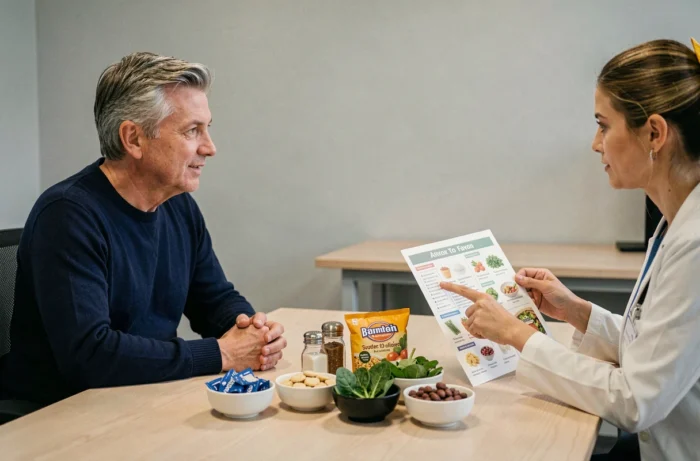
Limiting fast sugars reduces both blood sugar spikes and food cravings. Sodas, candies, pastries, and industrial fruit juices are the first to eliminate. We replace them with whole fruits (fiber slows sugar absorption), whole grains, and legumes.
Specifically, a meal that combines proteins, fibers, and a bit of fat (olive oil, nuts) stabilizes blood sugar better than a meal centered on white starches. Brown rice replaces white rice, and semi-whole pasta replaces regular pasta. This is not a restrictive diet; it is a rebalancing of carbohydrate sources.
Potassium and Vegetables: Compensate for Losses Without Excess
Corticosteroids cause urinary potassium loss. A potassium deficiency can lead to fatigue, cramps, and heart rhythm disturbances. Foods rich in potassium naturally compensate for this loss.
- Bananas, avocados, spinach, lentils, and potatoes with skin are among the best dietary sources of potassium.
- Dried fruits (apricots, figs) offer a high concentration and easily fit into a snack.
- Cooked green vegetables (Swiss chard, spinach) combine potassium and magnesium, two minerals affected by corticosteroid therapy.
Five servings of fruits and vegetables per day cover a good part of the needs for potassium and fiber while limiting the overall caloric density of meals. This is a realistic goal even when appetite increases during treatment.
Dietary monitoring under cortisone is not limited to a checklist of products to check off or ban. What matters is the consistency of adjustments and coordination with the prescribing doctor, especially when treatment extends beyond a few weeks. Adapting one’s diet does not negate the effects of corticosteroids, but it measurably reduces their impact on weight, bones, and metabolism.